Sentence Sparks
A calmer way for teens to get words on paper
For teens who find writing hard, and the adults who help them
15 short printable lessons that start with talking, leave spelling for later and build one sentence into a paragraph.

$37, one time. One 135-page toolkit for five weeks of short sessions, yours to reprint for your family.
Instant access
- Printable PDF, 135 pages, US Letter
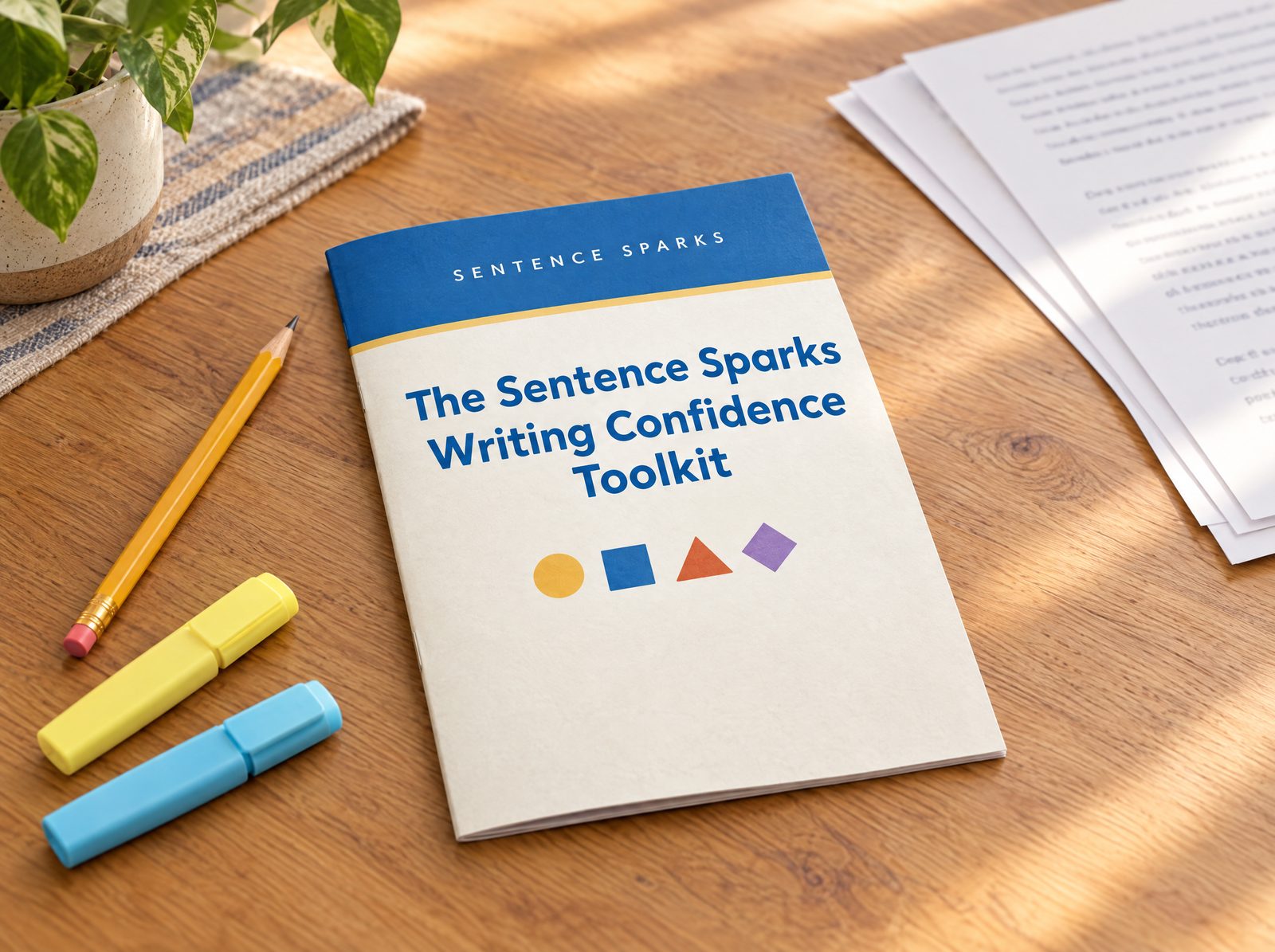
- Dyslexia-friendly layout: large type, wide spacing
- Works on paper or in any PDF app, no account
15 short lessons. About 20 minutes each.
Talk first. Every lesson has a "Say it first" option.
Say it firstSpelling later. It never counts while drafting.
Hard-day version. A short version in every lesson.
Does homework night sound like this?
- "They can explain the whole thing out loud. Then they stare at the page."
- "One paragraph takes the whole evening."
- "They say they're bad at writing. They are not bad at thinking."
- "I correct one thing and the pencil goes down."
Writing asks a teen to do many jobs at once: think of an idea, find the words, keep the order, spell and write. When spelling or handwriting takes a lot of effort, there is less room left for the idea. So a teen with plenty to say can freeze at a blank page. It is not laziness. It is a lot to juggle.
What a "just try harder" week can cost
You sit down after dinner. The assignment is one paragraph. Your teen knows the answer, they told you at the table. But now there is a blank page.
Ten minutes go by. You suggest a sentence, they write it and erase it. You point out a missing period and the pencil goes down. Now you are both tired and the paragraph is still not done.
If that happens three nights a week, and each night loses 40 minutes to the start, that is two hours a week. And the cost is not only time: each hard night teaches your teen one more time that writing is something they can't do.
Winging it means inventing a new approach every night while everyone is tired. A plan gives you the same short routine each time, so your teen knows what comes next and you know what to say.

Split the jobs. Do one at a time.
The toolkit takes the big job of "writing" and splits it into small jobs your teen can do one by one.
- 1
Talk first. Your teen says the idea out loud, to you, to a voice memo or to speech-to-text, then shrinks it and writes it down. Spoken words are already sentences.
Say it first - 2
Ideas before spelling. During drafting, spelling does not count. A tricky word becomes a first letter and a line, and the writing keeps going. Spelling gets its own small moment at the end.
- 3
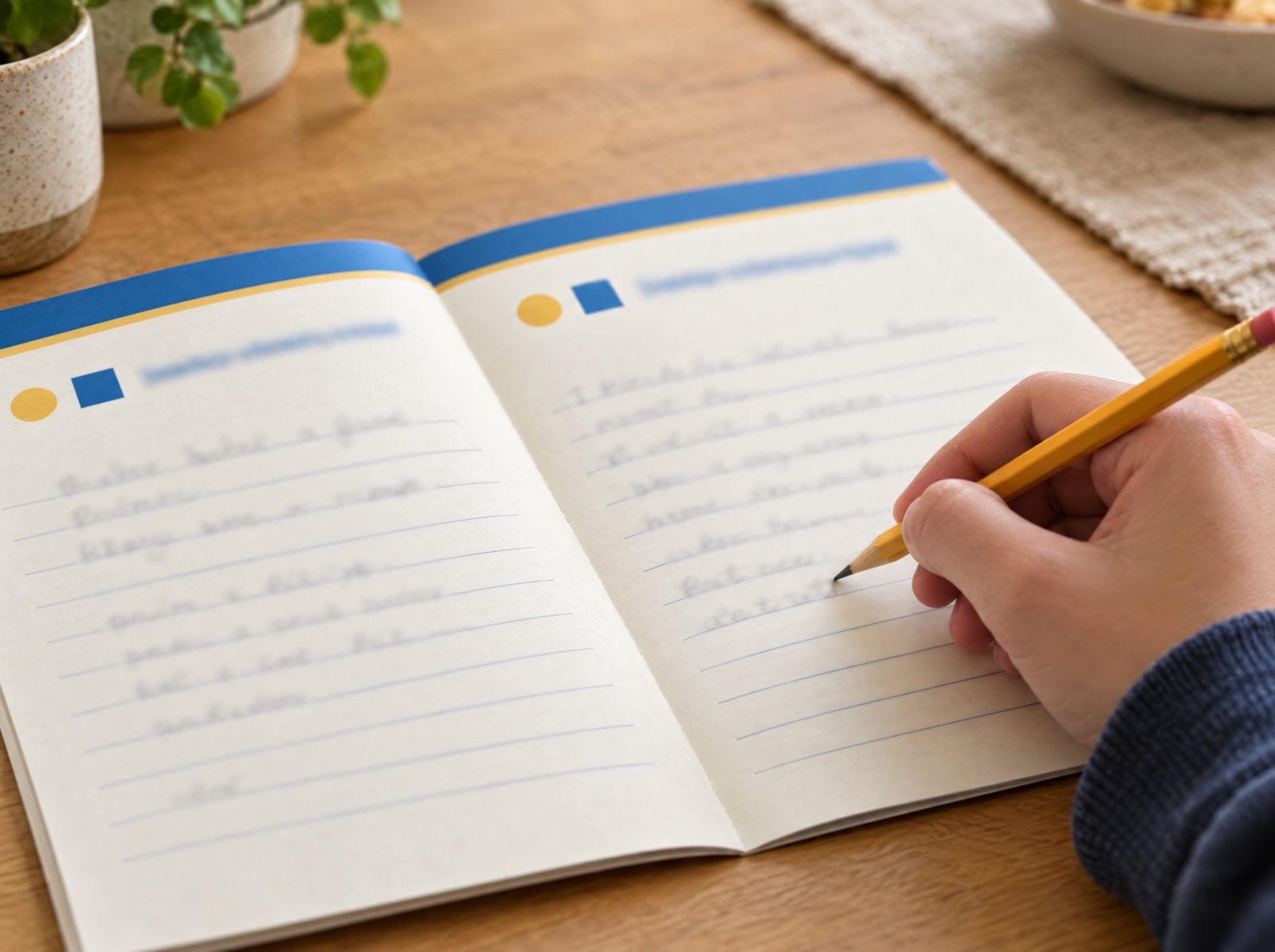
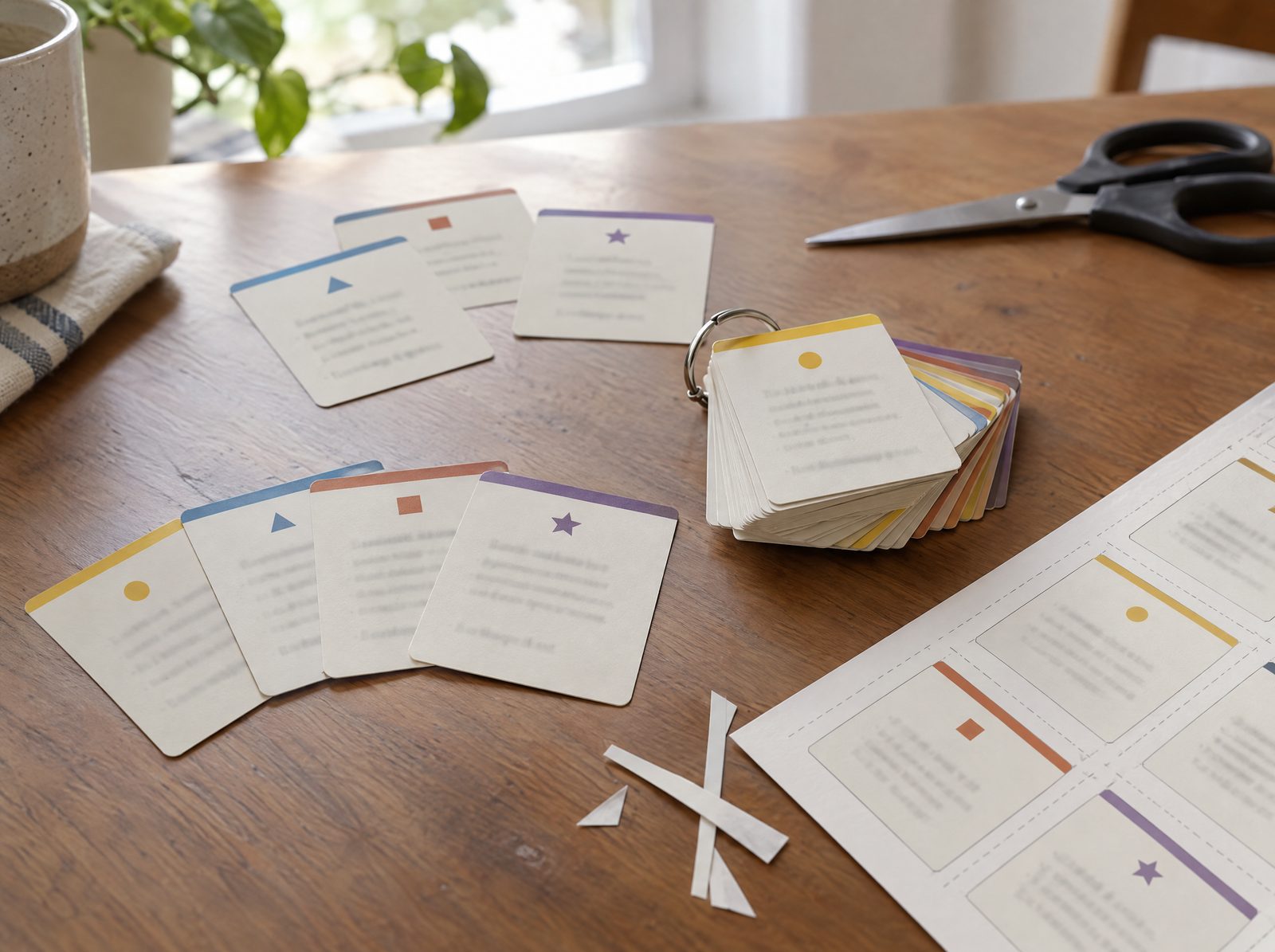
Paragraphs from pieces. Four shapes show the order of a paragraph: a circle for the main point, squares for details, a triangle for an example and a diamond for the closing. Your teen moves paper tiles before writing.
- circle main point
- square details
- triangle example
- diamond closing
- 4
Change one thing. When a piece is done, your teen listens to it, marks what works and changes one thing. Not five. One.

How it works
1. Print it or open it. Download the PDF. Print it on US Letter paper, or open it in any PDF app on a tablet.
2. Pick three days. Choose three calm times a week. The plan has a calendar and a checklist for all 15 lessons.
3. Do one lesson per session. Every session has the same 20-minute shape: warm up, Read This, Try It, Your Page, Look Back. Then stop.
4. Keep the best pieces. Your teen logs each piece and saves favorites in the portfolio pages.
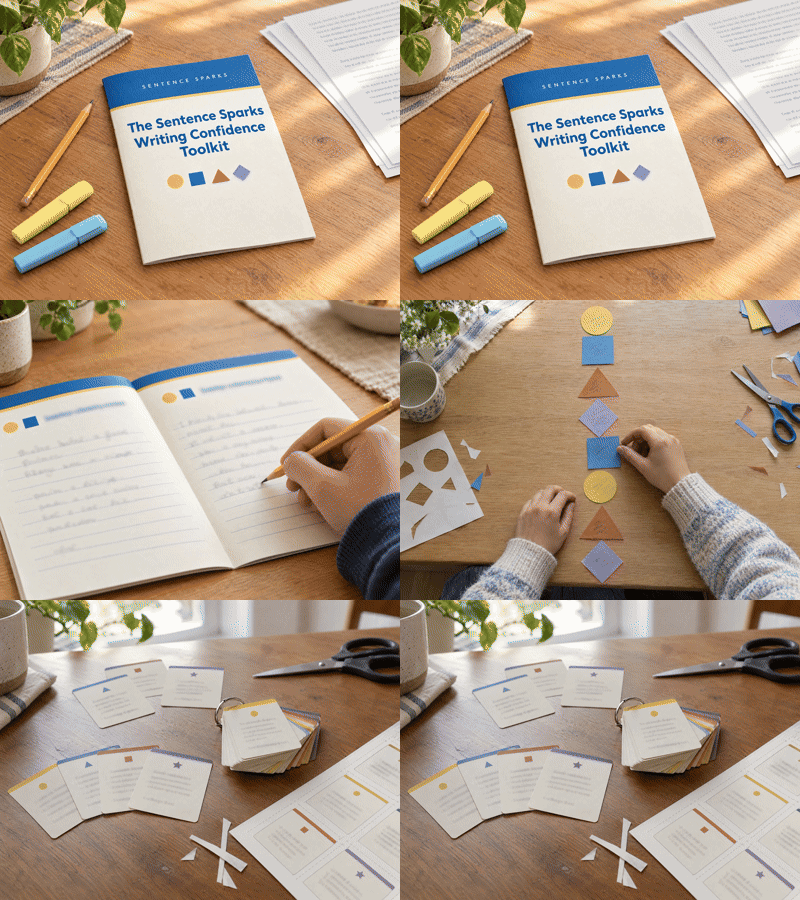
What's inside the toolkit
One printable PDF, 135 pages, US Letter. Six parts plus a Sources page.
Eight short sections for the adult:
- Start Here: How This Toolkit Works
- Your Five-Week Plan, with a calendar and a checkbox for each lesson
- Dyslexia in Plain Words
- How to Respond to Your Teen's Writing, with words to say and things to skip
- Setting Up a Calm Session, with the 20-minute shape
- Say It First: Ways to Get Words Out
- When and How to Ask the School for Support
- What This Toolkit Is and Is Not, with privacy and safety notes
Layout: plain sans serif type, larger text, wide line spacing, left-aligned pages, a soft background and bold (never italics) for emphasis.
What a Tuesday session looks like
It is 4:30. Snack is done. You both sit at the kitchen table, phones face down. You open Lesson 6, Keep Going: Spelling Placeholders, and read the page out loud together. It takes about two minutes.
The idea is simple: when you hit a word you can't spell, write the first letter, draw a short line and keep going. The Try It page shows a short paragraph with three placeholders in it.
Now it is their turn. They pick a prompt, say it out loud first and then write. Twice they stop at a hard word, and twice they draw a line and keep going. You sit nearby with your own quiet task.
At the Look Back page they count three placeholders and fix one with speech-to-text. The other two can wait. You say one specific thing you liked: the part about the soaked sneakers.
The timer says 19 minutes. You stop there, on a good note. Your teen checks the box for Lesson 6. Next session is Thursday.

Is this a fit?
This toolkit is for you if:
- Your teen, about 12 to 17, can talk about ideas but stalls at the page.
- You want a short, ready-made routine instead of inventing help every night.
- You want a calm way to respond to writing without red pen.
- Your teen likes choices, short tasks and a version for hard days.
- You want something that works with or without any diagnosis.
It is not the right fit if:
- You need a diagnosis, an evaluation or a professional assessment.
- You are looking for structured literacy instruction, tutoring or therapy.
- You need a full English course, a grammar course or a test-prep book.
- You want a program that promises better grades or test scores.
- Your teen needs help only a school team or a specialist can give right now.
Three ways to help with writing
A plan for each session
Starting from scratchYou make one up each night
Free videos and scattered postsTips, but no order to follow
The Sentence Sparks Toolkit
15 lessons in 5 weeks, same 20-minute shape
Something for hard days
Starting from scratchPush through or skip
Free videos and scattered postsRarely
The Sentence Sparks Toolkit
A short version in every lesson
Talk-first options
Starting from scratchIf you think of it
Free videos and scattered postsScattered across many sources
The Sentence Sparks Toolkit
"Say it first" in every lesson, plus a speech-to-text page
Prompts ready to use
Starting from scratchYou invent them
Free videos and scattered postsYou search for them
The Sentence Sparks Toolkit
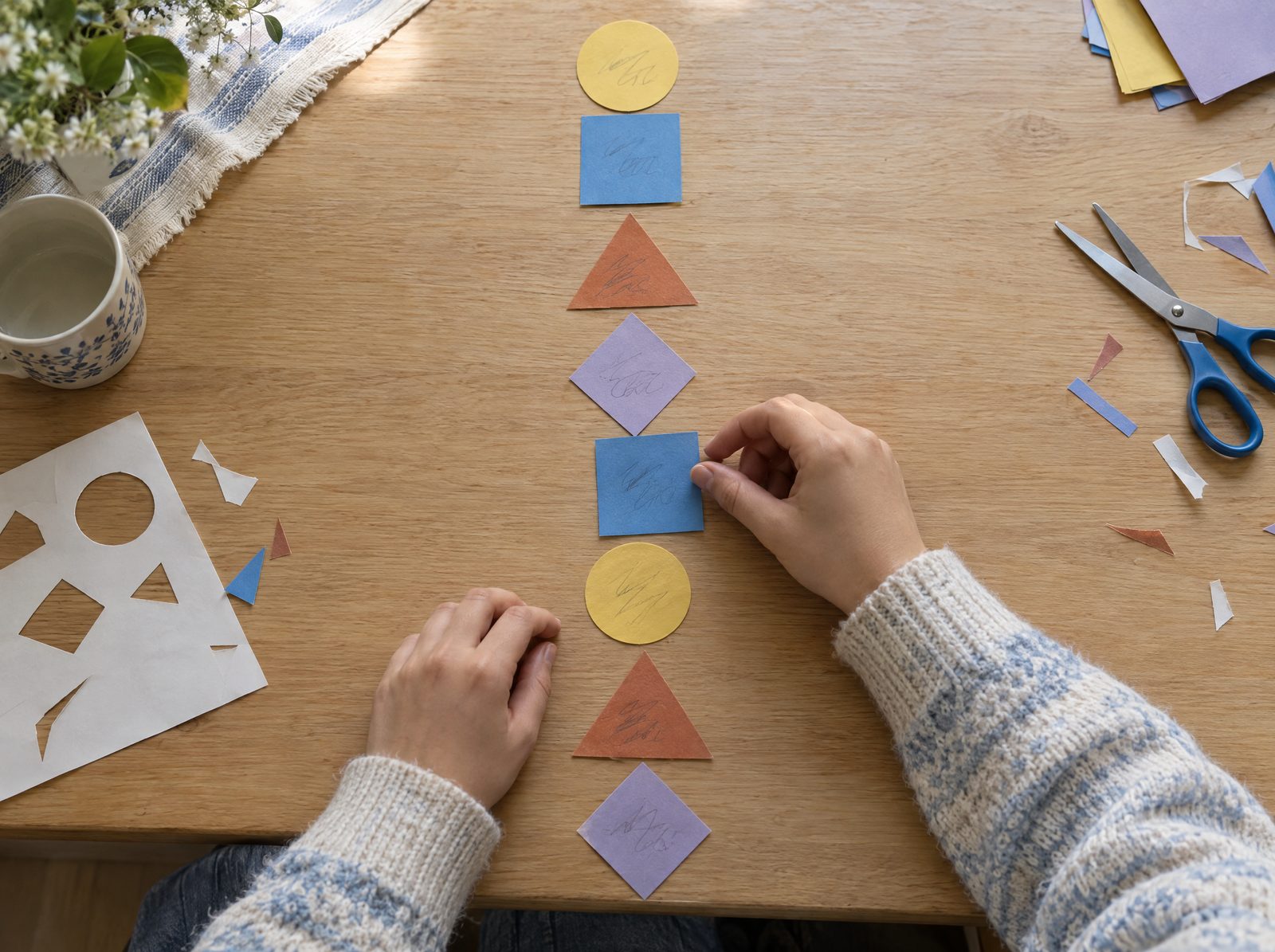
60 printed prompt cards in 4 sets
Paragraph structure
Starting from scratchHard to explain
Free videos and scattered postsUsually text-heavy
The Sentence Sparks Toolkit
Shape tiles you can cut and move
Easy-to-read pages
Starting from scratchDepends
Free videos and scattered postsDepends
The Sentence Sparks Toolkit
Large type, wide spacing, sans serif
What to say as the parent
Starting from scratchGuesswork
Free videos and scattered postsMixed advice
The Sentence Sparks Toolkit
Words to say and things to skip, written out
Start with one sentence this week
The first lesson asks for one sentence. Start where it is easy and build from there.
Everything in the toolkit
Start Here for Parents: a five-week plan, words to say and how to ask the school for support.
The 15 Lessons: five weeks of short sessions, each with a talk-first option and a short version.
60 Prompt Cards: a ready answer to "I don't know what to write about".
Paragraph Building Tiles: a hands-on way to see the order of a paragraph.
10 Writer's Tool Pages: idea maps, word banks, a spelling list and a card to keep at the desk.
Progress and Portfolio: a log and pages that show how much your teen has written.
Today: $37, one-time
Pay with card, Apple Pay or Google Pay. Secure checkout by Stripe.
14-day money-back guarantee
Try the toolkit for 14 days. If it is not right for your family, email productadvice.info@gmail.com with your order email within 14 days of purchase. We will refund the main product in full, back to your original payment method.
How we made it
Official sources first. The parent pages follow the International Dyslexia Association's 2025 definition of dyslexia, NICHD fact sheets, Understood's guides on accommodations and school evaluations, US Department of Education pages on IDEA and Section 504, and the Center for Parent Information and Resources. Every source is listed on the last page.
Built to be easy to read. The layout follows the British Dyslexia Association style guide principles: sans serif type, larger text, wide spacing, left-aligned lines and bold for emphasis.
Checked device steps. Speech-to-text steps come from each device maker's own help pages, checked in October 2026. Mentioning a product is not an endorsement.
Light prompts. All 60 prompt cards stay with opinions, interests, everyday scenes and things a teen knows well.
Clear limits. The toolkit says plainly what it is and what it is not, on its own page.

What this toolkit is, and what it is not
Sentence Sparks is a low-pressure practice toolkit for writing confidence, with a dyslexia-friendly layout. It is not a diagnosis or an evaluation. It is not instruction that treats dyslexia or any learning disability, and it is not tutoring, therapy, structured literacy instruction or educational therapy. It is not a substitute for school supports, an IEP or a 504 plan. It does not promise better grades or test scores.
If writing is holding your teen back at school, you can ask the school for help. Under federal law, a parent can ask a public school for an initial evaluation, and the school does it at no cost to you. Your state's Parent Center can explain how it works where you live (parentcenterhub.org).
If your teen writes or says that they want to hurt themselves or someone else, or seems to be in crisis, call or text 988 (the 988 Suicide and Crisis Lifeline) or chat at 988lifeline.org. If anyone is in immediate danger, call 911.
Questions parents ask

One sentence is a real start
Give your teen a short, calm routine for writing. Print it tonight. Start with Lesson 1 this week.
Instant access. Printable PDF. 14-day money-back guarantee.